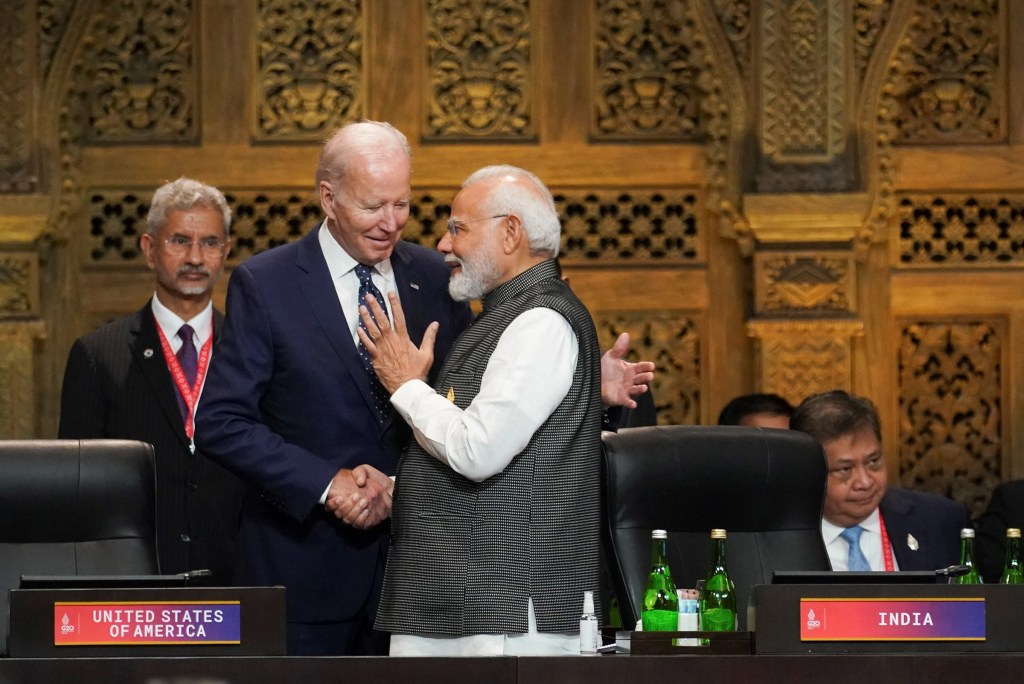
Recently, the Prime Minister of India, Narendra Modi, visited the US for the first time, and he stayed for four days. He was greeted with a welcome ceremony and a state dinner and was also invited to address Congress for the second time. These meetings were meant to display the peace between the US and India, and how the US sees India as a crucial partner in the global economy. On India’s side, Modi, who was denied entry into the US for his role in the Gujarat riots of 2002, is now a valued and respected leader. The meeting between President Biden and Modi showed a turning point in both countries’ relationship. These deepened ties signal the potential for two powerful countries to work together in tackling global issues. But other than the partnership, the Prime Minister met with President Biden to discuss a potential collaboration with India’s leading technology companies, along with the role India can play in the Indo-Pacific.
Indian Solar Panel maker Vikram Solar Limited has plans to invest more than 1.5 billion dollars into the US solar energy supply chain. India is also moving to join the US-led Artemis Accords through a space exploration mission to the International Space Station happening in 2024. For the US, tariffs imposed on US products such as chickpeas and apples will be removed without the expectation of the US removing tariffs on products such as steel or aluminum. Both countries also received various benefits in their defense and strategic partnerships. The US company General Electric has signed a deal with Hindustan Aeronautics to provide fighter jet engines for the Indian Air Force. For India, which does not have the capacity or manufacturing capability to produce these types of engines, this is a huge step towards advancing the country’s military. The Indian Defense Ministry has also approved the purchase of the SeaGuardian drones, which will help enhance intelligence and surveillance for the Indian Armed Forces. This was a huge deal considering that only a few US allies own the SeaGuardian Drones or the Predator Drone. In terms of more joint efforts, the two countries have also established an Indo-US Quantum Coordination Mechanism which will facilitate joint research opportunities between public and private sectors working in this space. The INDUS X Partnership was launched as well, which aims to enhance strategic and defense technologies. India also moved to enter the Minerals Security Partnership, a US-led coalition between 12 other countries and the European Union to create energy mineral supply chains. For India, this would also help push China out of its control over the Asian continent. For the US, it would only further build its reputation in the global economy and become a global force.
But what are the true intentions of this from India’s perspective? For India, this is the chance to show a country like China that India is a worthy opponent in the quest to dominate Asia. It also provides India the chance to diversify its allies and expand its partnerships. For years, India has been dependent on Russia for goods such as oil or arms. With the ongoing crisis in Ukraine, it has been difficult for Russia to supply India with those goods, even though India is still purchasing oil at cheaper prices. India understands that it cannot leave its relationship with Russia as Russia has been a long-time ally of India. Oil has been an integral part of that relationship. But beyond this, India understands that it needs to partner with countries like the US to give the technological and economic edge over China. The way China is advancing, countries such as the US see this as the perfect time to help both sides and gain India as an ally. For India, pushing to acquire that global reach and expand its various industries, as well as inviting companies to launch satellite programs within their country, will prove that the country is advancing as well. For instance, another part of Prime Minister Modi’s trip was meeting with Tech companies like Tesla, Apple, and Google to them into setting up operations in India. As India has one of the highest populations in the world, it is a key sight for many companies to expand their output within the country to gain that additional economic profit. Recently, Apple opened two more physical retail stores in India and plans to expand further into the country. This not only cements the China plus one strategy, as analysts are deeming it, but also puts India at the center of a technological haven. For two countries who have had tense relationships in the past, this meeting and this agenda for technological expansion just show how important this new relationship will be for the future. India and the US are cementing a relationship that will respond to the issues that are plaguing the 21st century and have ambitions that plan to rival the most powerful nations in the world.
By Krish Saraf




 Scribemen Magazine