In a broad sense, the dollar provides America with the power to control world trade, allowing it to impose sanctions on various countries that can effectively push them out of the global economy. This, of course, can lead to economic crises within other nations—potentially leading to a collapse within their infrastructures. As indicated by the fact that the US controls more than 20% of global markets, the dollar harbors enormous economic power. With it, America has the potential for mass economic control and dominance over the world economy. Before we begin, however, it is important to understand how the dollar came to be the most widely used trade currency.
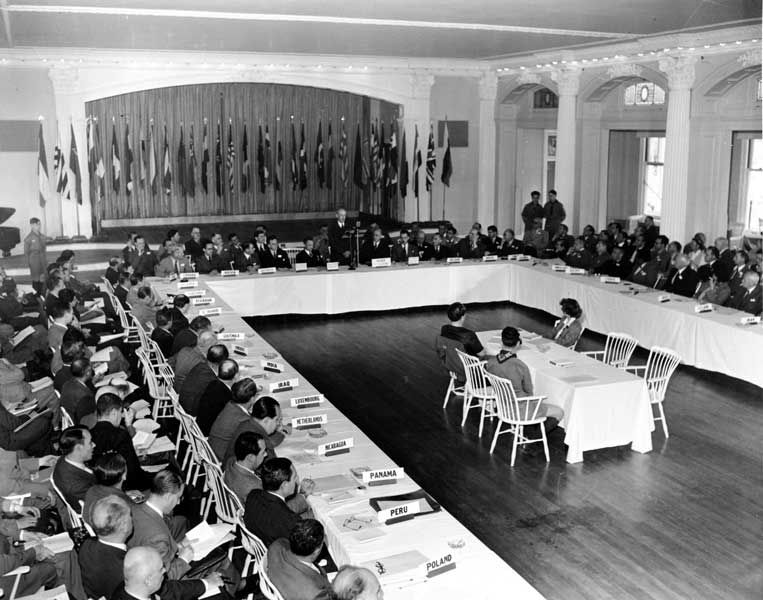
The 1944 Bretton Woods Agreement enhanced the link between the dollar and gold—upgrading its status to that of reserve currency. This effectively allowed America to control the supply of currency within the global market. Given that American monetary policy can manipulate the value of the dollar, the US has a major economic advantage. Along with this, the US is protected against balance of payment crises, because imports and exports fall under their currency.
As mentioned earlier, the US holds incredible power through its sanction programs; utilizing them, the US can weaponize the dollar and impose trade sanctions on private entities, organizations, or even entire countries. Unsurprisingly, the virtually limitless economic authority that the dollar holds has led to tension amongst global superpowers.
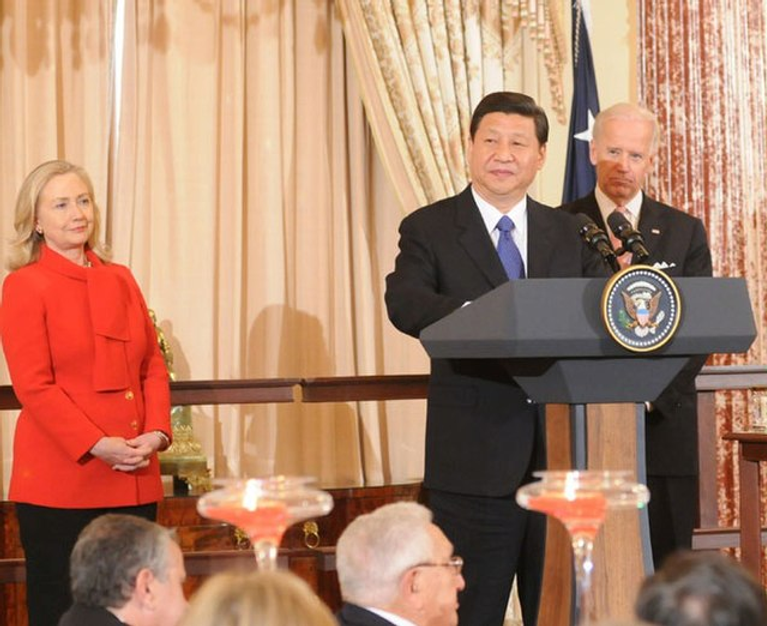
Recently, countries—namely, Russia and China—have considered moving away from the US dollar, to limit US control over the global economy and to promote pure economic independence. These nations are instead adopting the yuan, a Chinese currency, as their basis for trade. Due to this, both Russia and China are beginning to decrease the dollar amount within their reserves—and are prompting other nations to follow suit. But beyond the power struggle taking place, are there additional factors that could cause such a shift in attitude?

Russia is partaking in this due to tensions as a result of the Ukraine conflict. Their invasion has affected (in a mostly negative manner) the perception of the country, pushing it to work more closely with its allies—such as China. Tensions between the US and China have also escalated (due to numerous reasons that will not be expounded in this article), causing China to demand a weakening of the dollar’s impact on the global economy. Due to this, the nation has decided to move away from the US—with their first venture being the removal of the dollar. However, a question remains: how does the US plan to fight this?
The Biden administration is attempting to pull countries into an alliance—to unite worldwide markets; this would make it significantly harder to leave the dollar and pursue alternative currencies. Given that many nations are already opposed to Russian expansion, this approach appears to be ideal.
Shifting focus slightly, it is important to consider this situation through the lens of efficiency. Having a singular global currency makes trade much more efficient and reliable; rather than trading in the multiple exchange rates that would come as a result of various currencies in circulation, having one that is universal allows for a more balanced economy to flourish. However, many countries are beginning to consider the use of a different currency to begin having more control over the global economy. For instance, Saudi Arabia, which is heavily involved in the oil industry, may be shifting to the yuan. This may be a huge problem for countries like the US, which import oil from Saudi Arabia.
Another topic of interest is that of newly-developed digital currencies, which may begin to surpass the dollar and give countries more flexibility with trade. But it is quite clear that nations are beginning to shift their perspectives.
The introduction of these currencies into the markets could slowly diminish the value of the dollar—which could lead to a financial crisis, as this would mean the economy is in an uncontrollable (potentially ungovernable) state. There are also speculations that currencies will clash with one another, and their vast diversity may cause major power shifts. It is tough to say where this is heading—but it is clear that the dollar is no longer alone.
By Krish Saraf




 Scribemen Magazine